

It sounds crazy to say, but I gave a TED talk in April at the main stage in Vancouver, and it was released online today. You can watch it here.
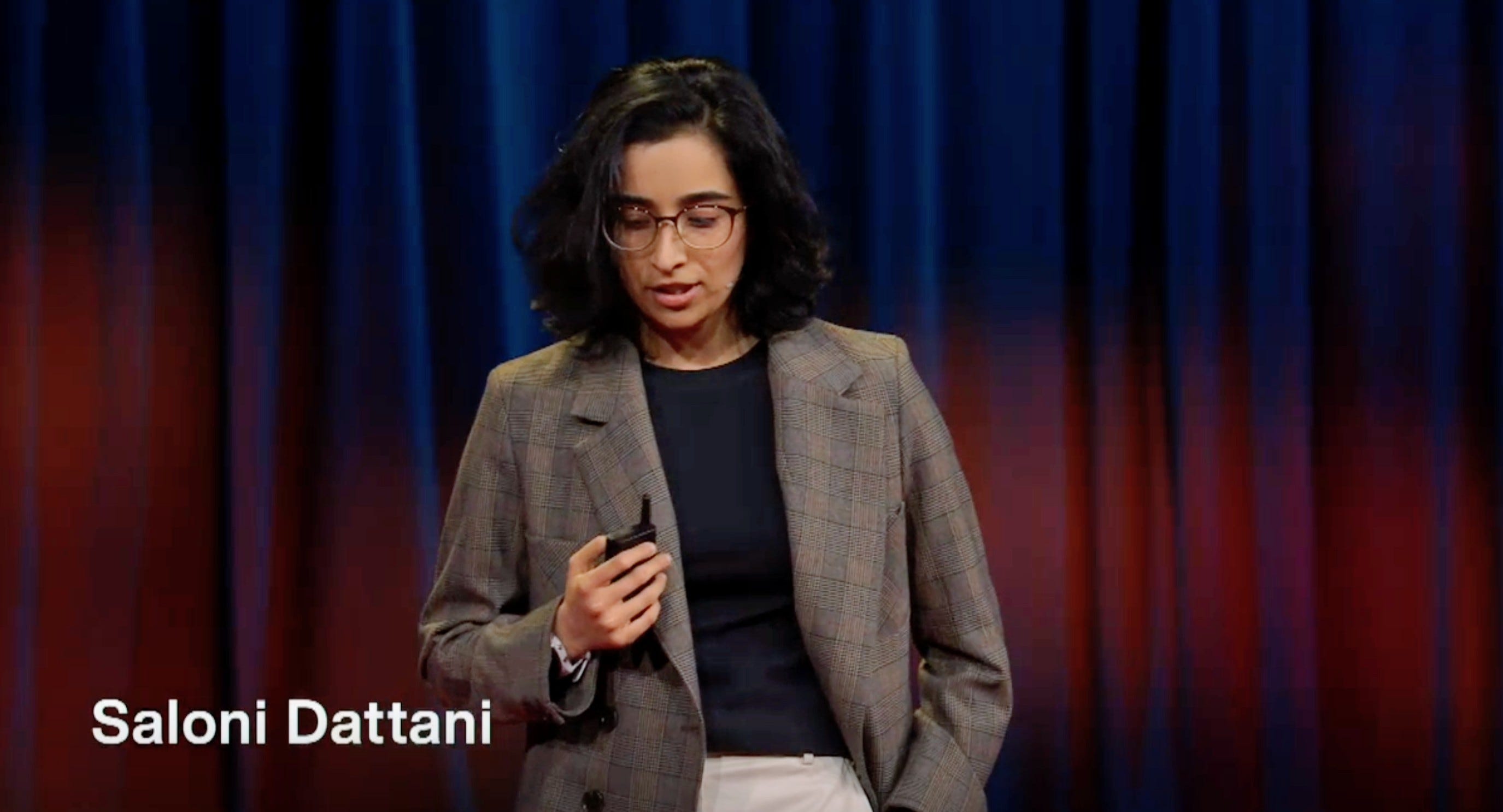
If those eleven minutes aren’t enough, I’ve adapted it into a longer, companion article for Works in Progress.
So how the heck do you give a TED talk?
Since you’re here, let me share a little background first. Back when I was at university, I became a student representative1, which occasionally meant standing in front of a few hundred students in a lecture theatre to give them a quick update. Once, after doing so, a new student told me “You don’t seem like the kind of person who would be in this role.” A little rude, but honestly, she was right.2 If you’ve met me in person, you’ll probably have noticed that I’m quiet and reserved and don’t like speaking to large groups of people. I avoid karaoke and dancing because they make me feel too self conscious. I feel fine giving talks, but only because I’ve done them enough that I can just pretend I’m having a conversation with friends and sharing some interesting facts.
Giving a TED talk, though, is actually pretty terrifying – the conference theatre fits around 1,500 people, and then hundreds of thousands of people (but sometimes millions) watch them online. Also, there’s no teleprompter, and the slides are behind you. But it’s not the kind of thing you can just turn down, especially if you have something important to say.
I think we’re at a point of divergence when it comes to medical innovation. Our tools are improving rapidly, but our ambitions to use them have fallen behind. Science funding has slowed down, aid budgets have been slashed, and immigration restrictions mean we’re driving away expertise. Even when things have come back online, the disruption and loss of expertise will make it hard to return to our previous trajectory. We could be doing so much more. It might not seem urgent in the abstract to improve medical innovation, but most of us know someone whose life it could change, and eventually I think it affects us all. It’s a topic that matters enough that I thought it was worth having some courage.
That was the backdrop. TED talks are very different from any other kind of presentation or talk I’ve given. Gus Hervey and Whitney Pennington Rodgers guided me through the whole process, and I wrote about ten drafts of the script before reaching the final version. It became more personal and less lecture-like over time.
Then I asked Lewis Bollard, who gave an excellent TED talk last year on factory farming, for his advice too. Should I practice walking around? How do you learn ten minutes worth of text? That’s about a thousand words! How do you look at people in the audience? Isn’t that terrifying? He shared some incredibly helpful pointers. One was to practice over and over again, including while listening to music, to help me remember the words even if I was distracted. Another was to give the talk in front of people as much as I could: invite friends over, walk around and make eye contact with them, and ask them for advice on the delivery.
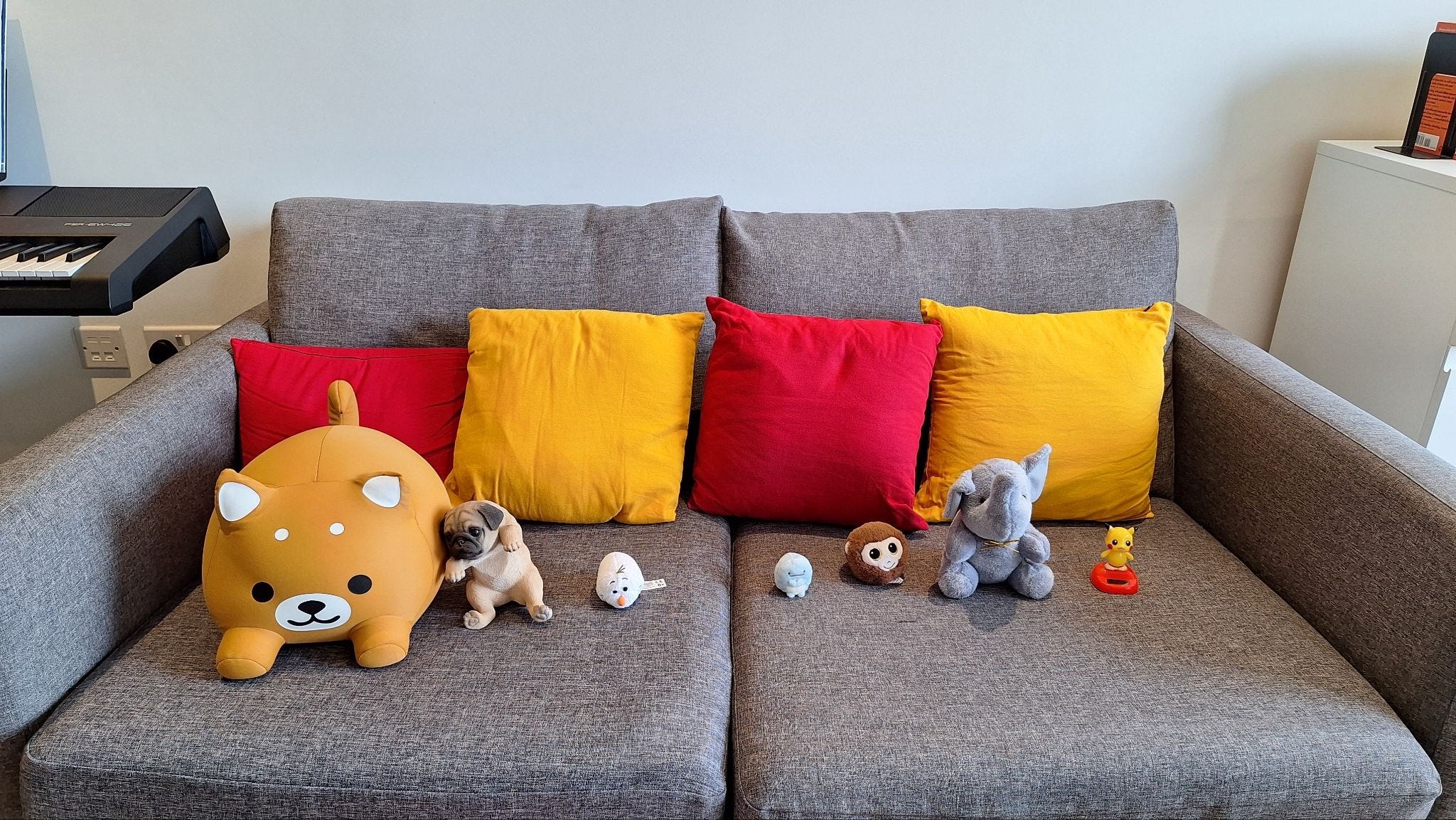
So that’s what I did: I gave the talk to my colleagues, invited friends over, and for friends overseas, I practiced the talk over Zoom. (Thank you to all of you who listened while I practiced, including someone I really admire who listened patiently even though I accidentally skipped an entire paragraph out of nervousness and the talk no longer made sense.3) I even practiced in front of stuffed animals and toys on my couch and made eye contact with each of them, one by one – they had no reaction to the talk at all, which seemed rude. Many friends mentioned that I looked ‘too calm’ and suggested that I should ‘be 20% or 60% more enthusiastic!’, to which I replied, ‘But that was the more enthusiastic version.’
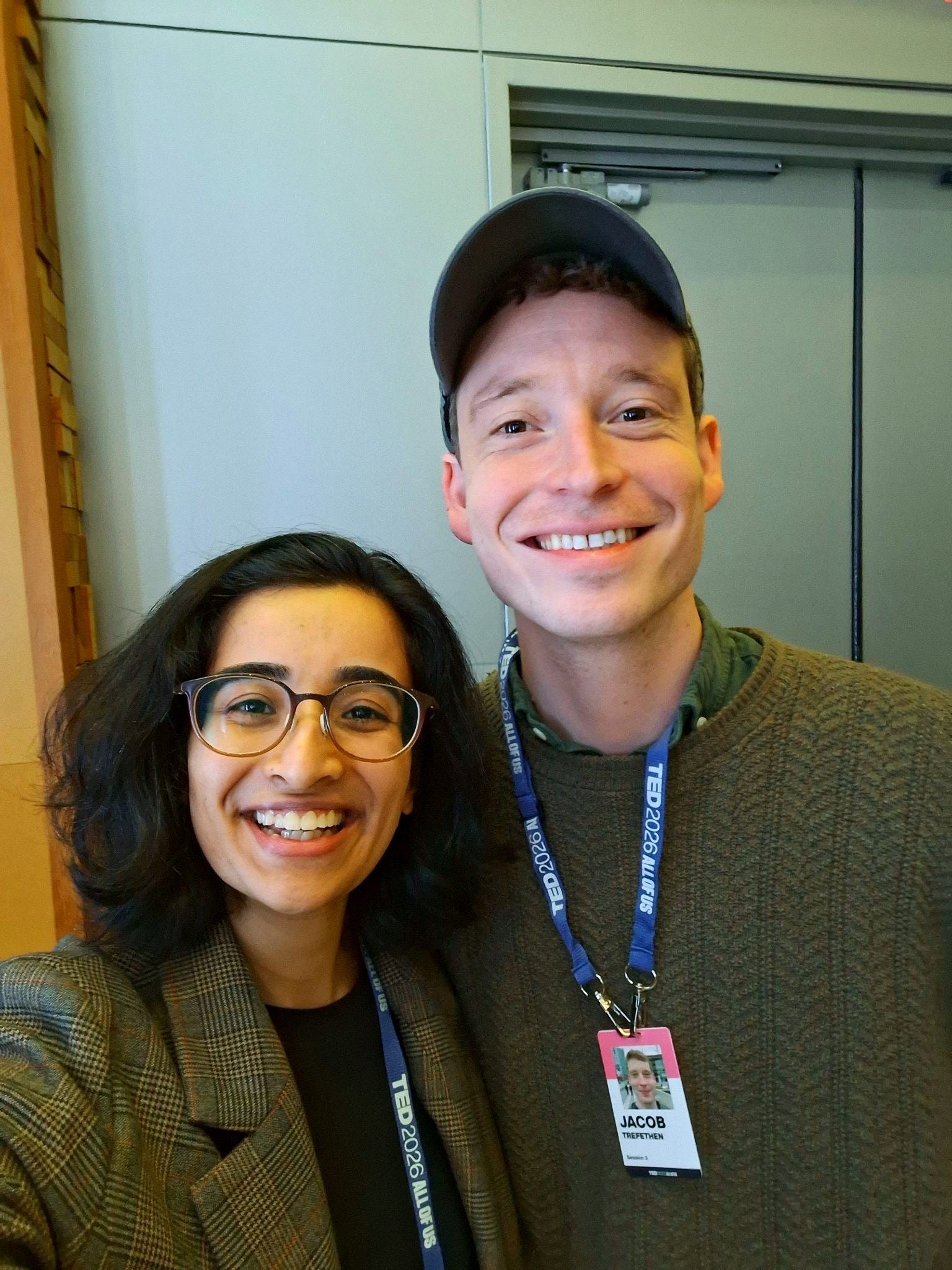
On the week of the talk, Jacob Trefethen, my co-host on Hard Drugs and one of the most wonderful people I’ve ever known, came with me to the TED conference for emotional support. I’m not sure I could have done it without him.
The TED conference was at the Vancouver Convention Centre, and it was the first time I’ve been a ‘VIP’. (You know, it’s actually really cool to be backstage and be able to go into almost any room you’d like and say hello to anyone. I said hello to so many people.)
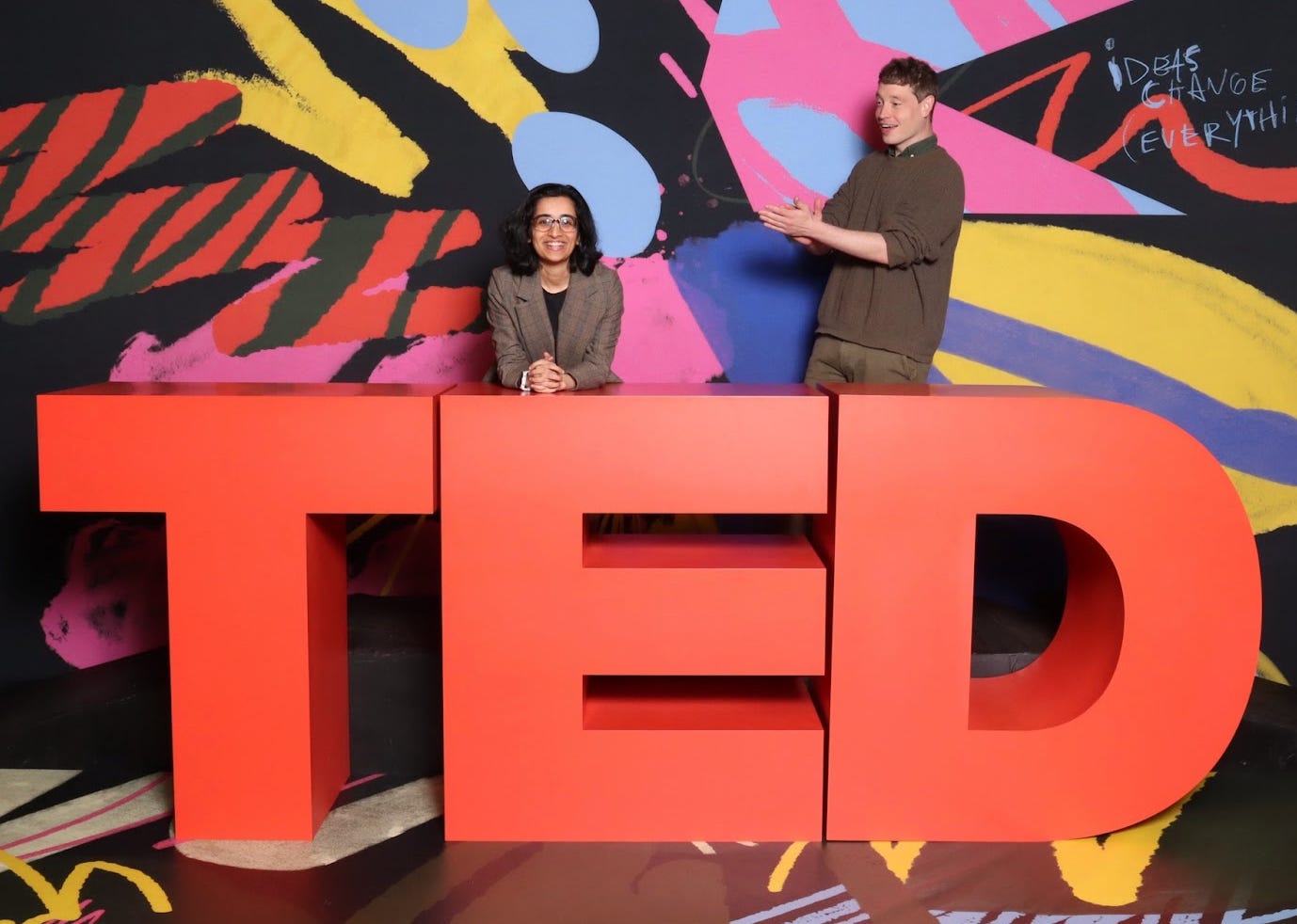
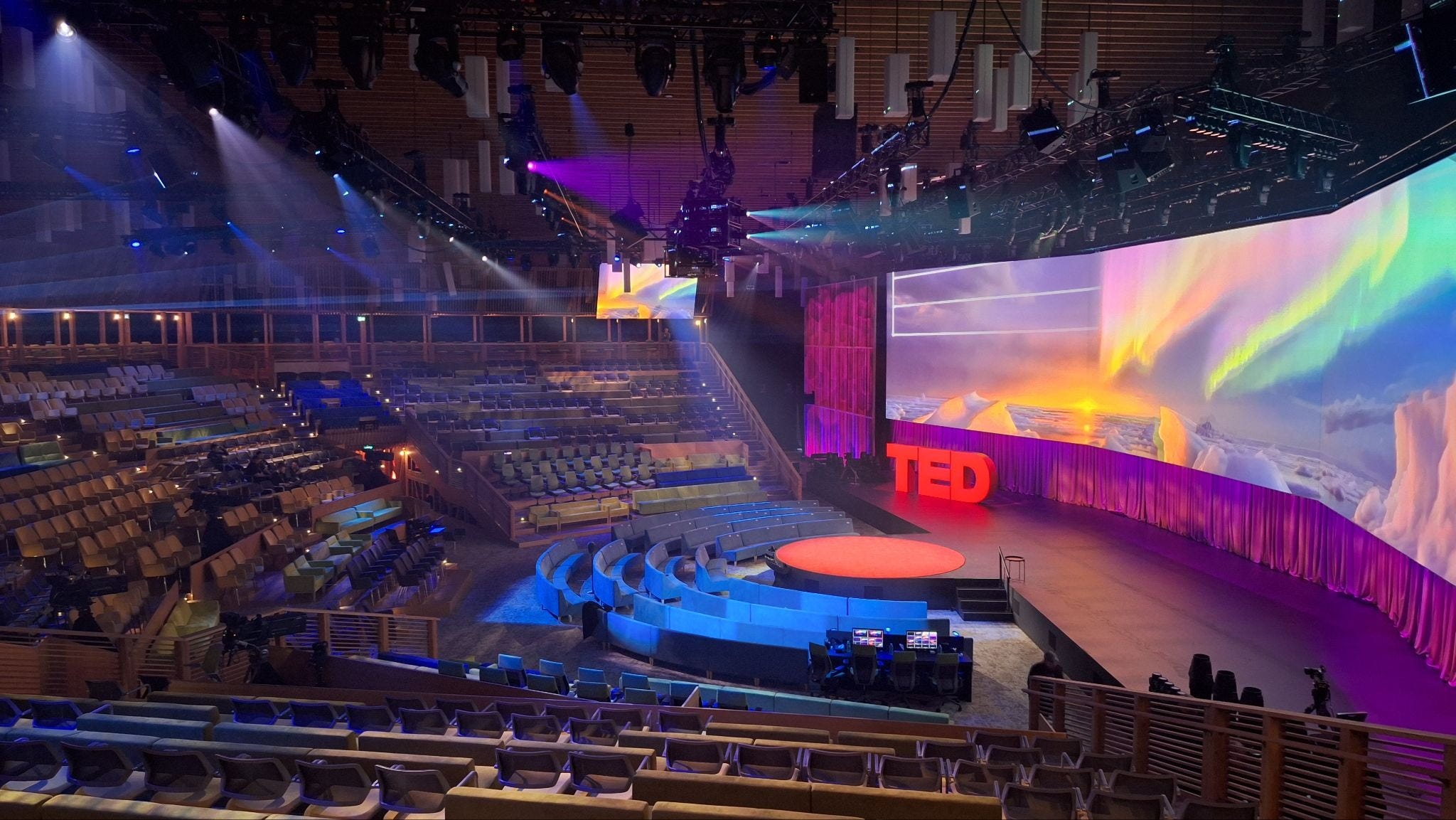
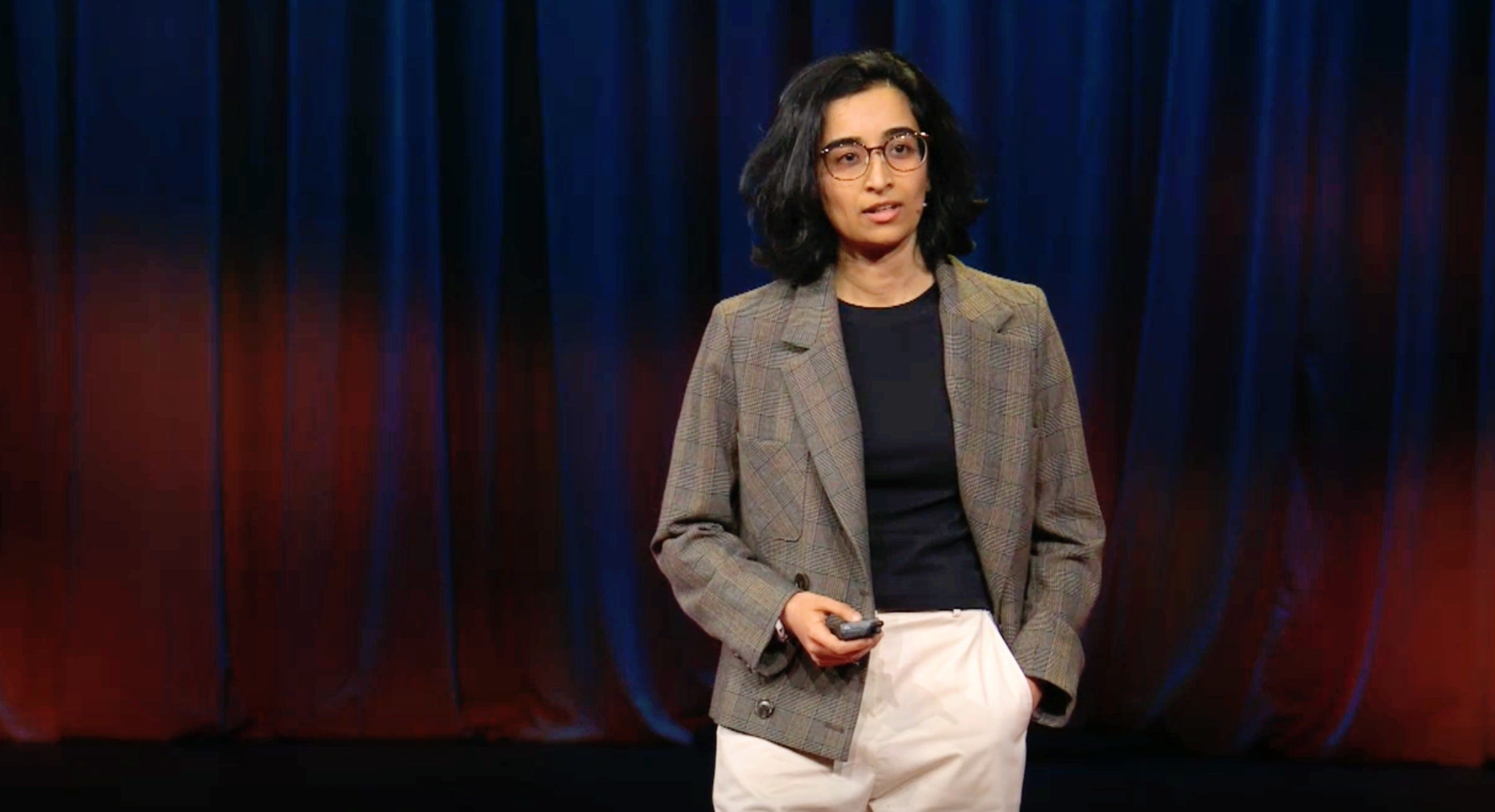
During the actual talk, I kind of blanked out from everything else entirely. I assume that my body just thought that if I remembered where I was or how many people were listening, I’d freak out, so it was best not to think about it. I couldn’t really see anyone’s facial expressions in the audience anyway, which helped, and made me feel just like I was in front of the stuffed animals at home (no, I’m kidding, the real audience was great, and they actually clapped at the end, unlike the animals). Then, as soon as I got off the stage, I felt incredibly relieved that I never had to practice the talk again, ever.
And that was all… until now! Now you get to see it! Here it is again.
I can’t undo or redo it, so let’s just hope it was good. I’m reluctant to watch myself speak, but I’ve heard from credible sources that it was actually good and sounded natural. You decide. Actually, don’t tell me if you didn’t like it. I don’t want to know.
Reading list
The talk covers lots of topics I’ve previously written about or covered in podcast episodes. Here’s a list if you’d like to read more:
The Golden Age of vaccine development The first vaccine was a lucky accident. Now we can design new vaccines in weeks, atom by atom. [Works in Progress]
Death rates from cardiovascular disease have fallen dramatically Over a century of progress in surgery, drugs, prevention, and emergency response has driven down death rates from heart disease and stroke. [Our World in Data]
Childhood leukemia: how a deadly cancer became treatable Before the 1970s, most children affected by leukemia would quickly die from it. Now, most children in rich countries are cured. [Our World in Data]
Why we didn’t get a malaria vaccine sooner (written with Rachel Glennerster & Siddhartha Haria) Hundreds of thousands of people die from malaria each year, but it took 141 years to develop a vaccine for it. [Works in Progress]
Lenacapavir: the miracle drug that could end AIDS (co-hosted with Jacob Trefethen) Saloni and Jacob talk about the development and prospects for this new drug, as well as the history of HIV, the initial discovery of retroviruses, and how HIV was transformed from a death sentence to a manageable condition. [Hard Drugs]
Should everyone be taking statins? (co-hosted with Jacob Trefethen) Heart disease is the leading cause of death worldwide, but it’s also one of medicine’s biggest success stories. [Hard Drugs]
Medical breakthroughs in 2025 An end-of-year round up of the biggest news in biotech and medicine that I wrote last year. [Scientific Discovery]
Or maybe you’d like reading the longer, article version of the talk here.
Okay, that’s all. Bye! :)
– Saloni
P.S. If you listened to me practice, gave me advice, or were just generally supportive in any way – thank you, thank you, thank you. For Gus, Whitney and the whole TED team, thank you for taking a chance on me, and for everything after that.
I was a student rep for a year and an ‘academic officer’ the following year, which meant overseeing 28 student reps and ~500 students across the medical school faculty. Tough crowd, and I only decided to do it because our course was so disorganized that I wanted to help.
She eventually became a very good friend of mine.
A great talk Saloni!
This is an AWESOME TED Talk! Thank you for delivering this important message and also for sharing your personal experience behind the talk itself!